LAKE FOREST PRESERVATION FOUNDATION
Spring 2025
Spring 2025PRESERVATION
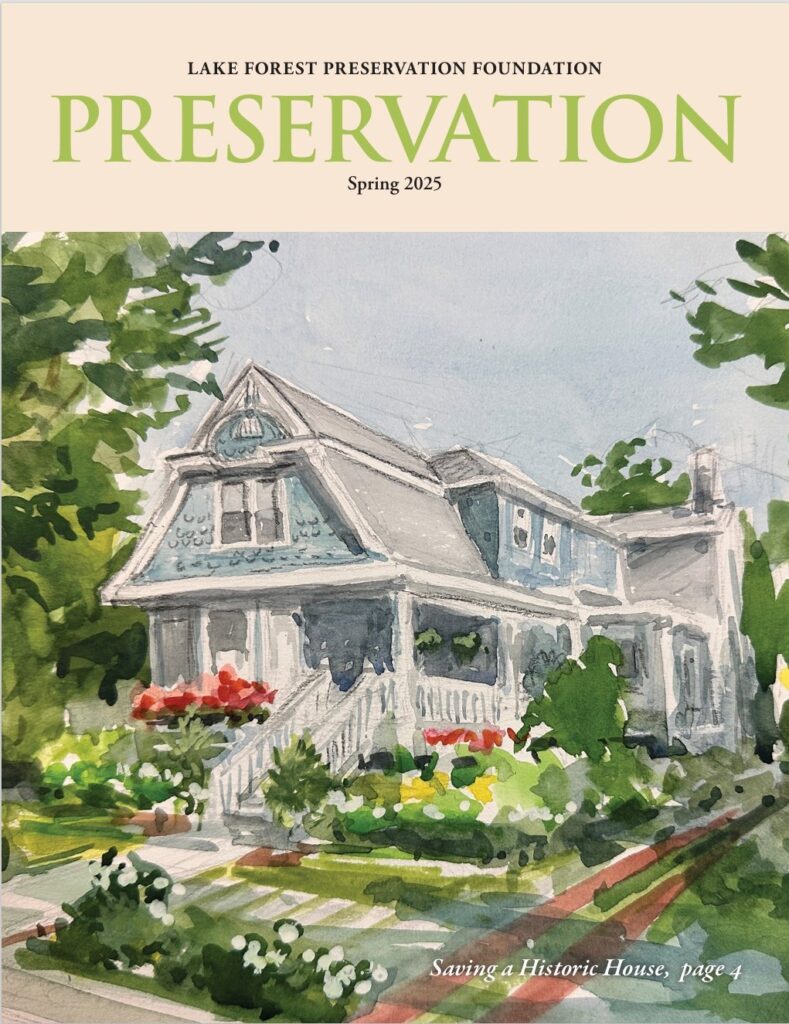
Saving a Historic House, page 4
Saving a Historic House, page 4
from the president
Welcome to the spring issue! In the Midwest, few things have thepower to evoke shared feelings of enthusiasm and hope quite like the first warm day of spring. While traveling, I once met a man who opined that if Chicago were like it is in the summer all year-round it would be the greatest city in the country. I explained to him that Chicago is like it is in the summer only because it is like it is in the winter. It’s a package deal. The exuberance of our springs and summers is because we have just four months to expend the energy pent up over the long winter. And this time of year, that energy is often directed to home improvement projects, whether it’s painting, landscaping, or adding space. This issue is dedicated to those projects. Some have the mistaken belief that preservation is about freezing a building in time, allowing no changes, and requiring those who live in them to dress in period-correct garb. Just the opposite, preservation’s best friend has always been thoughtful adaptive reuse. Indeed, most historic structures have dodged demolition precisely because they have been repurposed, at one time or another, for new uses, while preserving their historic features. Former factories, schools, railway stations, warehouses, hos-pitals, breweries, power stations, and even jails have been converted into boutique hotels, restaurants, apartments, bookstores, museums, and community centers, among other things. Adaptive reuse is a sustainable approach to building development that can help reduce waste and urban sprawl, while preserving history. Several examples exist in Lake Forest, perhaps none better than the Lasker Estate. As described in the Lake Forest Preserva-tion Foundation’s last issue, at its height the estate covered 480 acres with its own eighteen-hole golf course, an Olympic-size swimming pool, and twenty-seven out-buildings including barns, stables, dovecotes, a clubhouse, a theater, and green-houses. While the days of estate living on this scale have long passed, seventeen of the twenty-seven outbuildings still stand. Why? Because for decades the owners have
thoughtfully repurposed these buildings into single-family homes, while retaining their historic charm and character. Daniel Burnham famously said, “Make no little plans, they have no magic in them to stir men’s blood.” I like to think that he said this on the first warm day of spring after a long Midwestern winter. Even if we have a small house, it is the time of year for big plans. So, plant a large garden, convert or add space, restore a lost feature, and enjoy the spring. Brian Norton Survey Reminder: The Lake Forest Preser-vation Foundation wants to hear from you. Please take the time to fill out the survey at https://shorturl.at/CHVdG and let us know what we are doing well, what we can do better, and what we should be doing in the future. Your feedback will help inform our stra-tegic direction as we enter into the Founda-tion’s 50th year. Thank-you. Nominations for Historic Preservation Awards Due by March 23 Every year, coinciding with National Historic Preservation Month, the Lake Forest Preservation Foundation hon-ors families, businesses, and organizations that have demonstrated a commitment to excellence in preserving Lake Forest’s architectural heritage. The annual Historic Preservation Awards are based on criteria established by the Secretary of the Interior’s Standards for the Treatment of Historic Properties and fall into five categories: Preservation — Maintaining the historical integrity and character of a structure or landscape through conservation, maintenance, and repair. Rehabilitation — Continuing the use of a historic structure through repair, alterations, and additions while protecting its historical, cultural, and architectural character — including adaptive reuse. Restoration — Recovering, revealing, or representing the state of a historic structure or landscape as it appeared at a particular time in history. Reconstruction — Recreating the form, features, and details of a historic structure or landscape through new construction. New Construction or Infill — Build-
Brass plaque recognizing the Young Men’s Clubing new construction that demonstrates exemplary contextual compatibility in an established neighborhood. Since initiating the Historic Preservation Awards program in 1991, the Foundation has honored over 250 properties. Their owners represent the dedication of all Lake Foresters who work to preserve Lake For-est’s cultural landscapes and architectural heritage. Nominations for the 2025 awards are being accepted through March 23, 2025. Nominations are welcomed from any inter-ested party — the property owner, a neigh-bor, a friend, or an admiring passerby. Each awardee receives a distinctive bronze plaque for mounting on the property. To learn more about the awards, view past winners, or submit a nomination visit lfpf.org/nom-inate or call the LFPF office 847-234-1230. If you missed our March 9th program, Preservation Awards — What Makes a Winner, view the recording at lfpf.org
/videos. The 2025 Awards will be announced at the Annual Meeting on Sunday, April 27th at Gorton Community Center followed by a reception for attendees at a historic home. Featured Programs in addition to celebrating Lake Forest and preserving its historical character, we believe that education is essential to create an awareness and appreciation of historic resources. We love being able to showcase some of the most interesting and beautiful historic properties in town at our programs and events. Jennifer M. McGregor introduces Stuart Cohen and Julie Hacker Steven Semes University of Notre Dame Professor Steven Semes presented an informative program at Gorton on September 11. His new book, New Building in Old Cities, details the work of Gustavo Giovannoni, an Italian historian, architect, and urban planner in the early 1900s, whose writings stress the importance of connecting historic architecture and con-temporary design. The Family Walk Around West Park took place on October 20 and was a ton of fun. On a beautiful fall day, kids and adults learned about the historic neighborhood, enjoyed refreshments, and filled LFPF tote bags with goodies retrieved from the scavenger hunt hosted by several homeowners. Stuart Cohen, Professor Emeritus in architecture at the University of Illinois, Chicago, and architect, Julie Hacker were the featured speakers at a program that LFPF co-sponsored with the History Center on November 6. The couple discussed their work and their new book, First Additions: Strategies for Adding On. Members Holiday Celebration
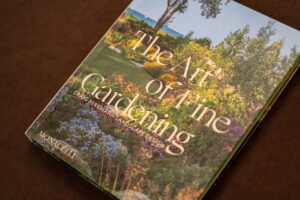
(above and right) For more information and updates, visit lfpf.org/events. Charles Stick Thanks to the generosity of our friends at Crab Tree Farm, Charles Stick, the Virginia-based landscape architect, spoke to a standing-room-only crowd at Gorton on November 12. His presentation focused on the contents of the new book, Charles J. Stick and His Gardens, featuring outdoor landscapes in Lake Forest, the North Shore, and around the country that demonstrate Stick’s ability to adapt his signature style to varied geographies. The Members Holiday Celebration was held on December 8 at the Ralph H. Poole House in Lake Bluff. It was another gath-ering featuring a classic home designed by David Adler, beautiful grounds, a stunning collection of artwork, delicious appetiz-ers, and a signature David Adler cocktail. If you are not currently a member, you’ll want to join to receive an invitation to this event. Saving a Historic House Before After Brian Norton Home renovation articles always seem to begin with dramatic “before” and “after” photos. Rarely shown, however, are the not so glamorous “during” photos, like those shown opposite. And there is a good reason for this omission. Weeks and sometimes months go by when the home looks like this, with few hints of any visible progress — just gaping holes, dangling wires, and broken plaster. Who knew how much construc-tion debris and abandoned squirrels’ nests one small house could produce? But it is in these moments when the ultimate ques-tion — forgotten in the euphoria over archi-tectural renderings — returns. Is it worth it? Despite the inevitable delays, surprises, and gaffes, the answer is a resounding YES. This is so because, while known for its estates, Lake Forest has a secret. Within a short walk of stores, train stations, and parks are numerous single-family gems. You can find beautifully maintained and restored American Foursquares, Tudor Revivals, Victorians, Craftsmen cottages, and Dutch Colonials. Many are in perfect condition while others require some work. Either way, you can end up with the best of both worlds — the charm and quality of a historic home with modern conveniences that is close to amenities. In this case, the house required much work. It was small and had been vacant and unheated for several seasons, resulting in burst pipes, peeling paint, and creaky floors. The City of Lake Forest had received several inquiries about it, all of which started with the same question: “Can we tear it down?” But the house was solidly built and had retained its compelling architectural fea-tures both inside and out, including the interior woodwork and exterior decorative shingling and trim. Because of the damage, however, the interior was rebuilt from the studs, while preserving the original wood-work and windows. And an addition to the house and a detached garage were constructed. The objective was to maintain the historic integrity of the original structure, albeit with better insulation and modern wiring, and add space consistent with the original design. We learned some lessons along the way.
Patience — The single most important quality necessary for any sizeable build-ing project is patience. It will take lon-ger than you think. Because of the scope of this project, the construction process itself took almost eighteen months. By comparison, the Empire State Building was completed in one year. Go figure. In addition, the construction pace is uneven. The framers will come and within a week there will be a structure, and you will think that everything will be wrapped up soon. Then months will go by with no discern-ible progress. Be patient. And we were for-tunate to have wonderful neighbors who were also patient. Use knowledgeable professionals — It is critical to have an architect and builder who have experience and expertise rehabilitating older homes and who are familiar with Lake Forest’s rules and processes, which differ depending on where the house is located and whether it is in a historic district. Lake Forest is appealing because, in gen-eral, those processes are designed to ensure that changes to homes and new construc-tion are visually compatible with the style of the home and the neighborhood. Archi-tects and builders who have experience with older homes and Lake Forest know how these processes work and can better facilitate the project. In our case, following relatively quick board approval of the architect’s plans, it still took several months to get the nec-essary permits. When Lake Forest issued them, I joked with the builder that there was just one condition. He could only use tools available in 1910 to build the house to achieve an authentic look. He didn’t laugh and was likely thinking about where he could find handsaws. Joking aside, in my experience, the review boards, the City staff, and the field inspectors were unfailingly friendly and sympathetic and were always trying to help. And, in the end, their suggestions made the project better. Expect Surprises — I grew up watching the Beverly Hillbillies. If someone told me that they had discovered oil on my property, I would have thought that would be a happy and prosperous day. Not so much when you are renovating a house. It means they found an old heating oil tank under the driveway that must be removed. Every project has some surprise, but they are solvable and hopefully make for good stories. Help — In addition to City staff, there are many resources in Lake Forest to help with a project. The Lake Forest PreservationThe objective was to maintain the historic integrity of the original structure, albeit with better insulation and modern wiring, and add space consistent with the original design. Foundation, the History Center of Lake Forest-Lake Bluff, and the Lake Forest Library have information about the homes and neighborhoods in Lake Forest and may aid in the research of your home. Also, as set forth in greater detail in this newsletter, there are tax advantages to rehabilitating a historic home. Just be sure to understand what changes can and cannot be made during the rehabilitation to take advantage of those tax savings. For our project, for example, there was a question whether adding an entry to the dining room was consistent with
the original design, which if added might have jeopardized the tax savings. Through research, however, we were able to show that the house was a kit house and the ads from 1910 showed the floor plan with the entrance we wanted to add. Save the windows — Think twice about changing the original windows to new “energy-efficient” windows. Most original windows in older homes are built with old growth wood and classic “wavy glass.” Many are still solid over 100 years later and, if not, can be repaired. They can also be
made more energy efficient with insulation and good storm windows. In this house, all the older windows were operable and in excellent condition. Only one window had to be replaced, and it was a newer replace-ment window. So, in sum, it was worth it. Besides hav-ing a historic home with modern amenities and adequate space, near the downtown, West Park, and the train, there is the satis-faction in saving a unique historic building that otherwise would have been lost. Property Tax Savings Available for Rehabbing Historic Homes 907 N. Sheridan Road, sketch by Alice Moulton-Ely Susan Benjamin he Illinois Property Tax Assessment Freeze Program is a well-deserved reward for homeowners who rehab their historic homes. To qualify, your house needs to be within a historic district, locally landmarked, or listed individually on the National Register of Historic Places. About a quarter of Lake Forest’s residential households, many downtown Lake Forest build-ings, and several parks form a layered, quilt-like pattern of historic properties within five local historic districts and two National Register districts. In addition, there are thirty-one individual local landmark properties and structures. If your home is not located within a historic district, your property can still qualify for the program if it is designated a Lake Forest Historic Landmark. Once your rehab work is complete, the assessed value of your property is frozen at the level it was when your rehab began. It is frozen for eight years; then your assessed value goes up in quarterly increments until in year twelve your assessed value reaches the level it would have been without the freeze. Altogether there can be eleven years of benefits. Even if your rehab has already started, it is not too late to apply for the program. An application can also be com-pleted if your project was finished less than two years ago. To tap into the program, you spend 25% of the Assessor’s Market Value the year work began and follow the Secretary of the Interior’s Standards for Rehabilitation. These nationally established preservation guide-lines apply to the exterior visible from the public way to interior primary spaces such as foyers, living rooms, and dining rooms; special features like staircases, fireplaces, and historic trim; and quality materials like quarter-sawn oak floors and historic paneling. There is free reign on the remodeling of kitchens and bathrooms. Work on mechanical systems — electrical, plumbing, and HVAC — qualifies. Only landscaping is a non-qualifying expense. Money spent on additions and new construction on your property counts toward the 25% spending threshold. That wasn’t always the case; this recent change opens the door to many more homeowners who would like to take advantage of the property tax assessment freeze. The program is run by the Illinois State Historic Preservation Office (SHPO) in Springfield and has been available for sev-eral decades. Three experienced architects on the SHPO staff review projects and encourage landmark homeowners through-out the application process. This tax incentive preserves the historic homes we love and makes updating them more attractive and affordable. Benjamin Historic Certifications specializes in landmark nominations and tax incentives. Lake Forest’s charm, beauty, and archi-tectural significance didn’t occur by accident. It’s the product of years of fine planning and design. Architects like Howard van Doren Shaw, Frost and Granger, Edwin Hill Clark, and Stanley D. Anderson shaped our Historic Business District. We thank Almerin Hotchkiss for laying out a curvilinear street plan that follows the ravines. Through our dedication to the preservation of the historic visual character of Lake Forest, we: Educate — our community and beyond in different ways. This past season, we hosted a lecture by Steven Semes as he pre-sented his new book. We learned details about historic West Park neighborhood at an event designed for families. Archi-tects and authors, Stuart Cohen and Julie Hacker, discussed their new book at a pro-gram co-hosted with the History Museum. The year ended with a book-signing with landscape architect Charles Stick, who shared his garden stories with a large audi-ence. And finally, it’s always a pleasure to have our Holiday Celebration take place in a significant home. This year, with sold-out attendance, we learned about David Adler’s design of the Ralph H. Poole House. Advocate — for sensitive development that satisfies both the codes and ordinances as well as promotes a greater respect for our surroundings. The LFPF Preservation Awards recognize projects that contribute to the visual character of the city. We sup-port the City’s boards and commissions that work with City staff along with developers and designers maintaining a delicate balance throughout Lake Forest.
Fund — to honor our city by restoring various brick and stone projects. This year, the Foundation restored the early 1900s gate structures and 1980s gates for the former Arthur Meeker estate, Arcady, redeveloped in 1985 as Dieu Foret. The Arcady Gate in the Dieu Foret neighborhood is located at the southwest corner of Waukegan Road and Mellody Road. We continue to support the preservation of local treasures as well as fund our quarterly newsletter that reaches household in Lake Forest.Preservation Foundation members enjoy house walks, garden strolls, and a holiday party in a historic home. We want to secure the path for future generations to value our community’s historic character.
Please join for the first time or renew your membership today. It’s easy — simply complete the enclosed reply envelope or make an online contribution at We thank you in advance for believing in the future of Lake Forest. Davis Priest, Archivist Uncovering Treasures
he Lake Forest Preservation Founda-tion welcomes Davis Priest as its new archivist. A recent University of Vermont graduate in art history and Italian studies, Davis developed a passion for archives during her summer appointment with the Medici Archive Project in Florence. After joining the Foundation as an intern in September, she was hired part-time to establish an archive documenting nearly fifty years of preservation work in Lake Forest. She is collaborating with the Art Institute of Chicago, the Illinois Digital Archive, Chicago Preservation, and Lake Forest Academy to promote the Foundation’s collections and holdings. LFPF is coordinating the donation of a historic collection of blueprints by architect William Alderman, known for his work on Chicago’s South Side. His designs include the Ada S. McKinley House, Liberty Baptist Church, and other significant
Chicago institutions. New Life for Old Homes 255 N. Green Bay Road, photo by Marcus Norman Arthur H. Miller November 2024 issue of Country Life*, a journal published in the United Kingdom, featured an editorial, “New Life for Old Homes.” The author reviewed the history of restoration and rehabilitation of English country places, noting a distinction between the New Classicist era of the 1990s when accurate resto-ration was the main idea, and the current era when additions reflect materials and living conditions of today. Lake Forest offers good examples of both approaches following changes in ownership of two significant estate houses. Stewardship alone is the goal of the new owner of 255 N. Green Bay Road. The 1934 Adler and Elkins masterpiece, “Suffield House,” was designed for Mrs. J. O. Armour. Now, the owner wishes to learn more about the 15,000 s.f. house with its original, eclectic assemblage of American, English, and French antique details such as ornate plaster moldings and 1800s fireplace by American, Samuel McIntosh. In its own way, this estate vies with English Renaissance archetypes. By contrast, the owners of 610–620 Lake Road, near the south entry to Forest Park, have been adapting this red brick and limestone Federal Style house for family life. Designed in 1925 by Rebori, Went-worth, Dewey and McCormick for Wayne Chatfield-Taylor, the current owners have protected the north façade of the house, with its distinctive Greek Revival distyle in antis columnar form flanking the entry. But on the south side, facing the large lawn, stands a new attached garage and extended open-plan living space. Edward Deegan designed the addition with style and mate-rials compatible with the original. Changes to the interior include repurposing the east side of the main floor and celebrating the historic character of the west side with new color tones. Rather than observing one restoration approach succeeding another in Lake For-est, these two impulses flourish together, depending on owner needs and the sur-vival of original structural conditions. Both houses contribute to the local estate heritage. *Country Life is available on the Lake Forest Library’s Libby app. The southeast garden façade of 620 Lake Road showing new addition at center, and garage at far right. Original south portico at 620 Lake Road, the Federal style semi-circular form with pilasters echoing the north entry distyle in antis form. 620 Lake Road, photo by Marcus Norman
11
NON-PROFIT ORG
U.S. POSTAGE
PAID PERMIT NO. 184 LAKE FOREST, IL
60045
NON-PROFIT ORG
U.S. POSTAGE
PAID PERMIT NO. 184 LAKE FOREST, IL
60045Lake Forest Preservation Foundation 400 East Illinois Road, Lake Forest, Illinois 60045 www.lfpf.org
ECRWSS
Residential Customer Lake Forest, IL 60045
Save the Dates!
Preservation Awards — What Makes a Winner? Sunday, March 9
2:00 p.m., Gorton Center
Learn from a panel of experts about best practices regarding old and new design and landscape/building connection. Discussion will also cover judging criteria for the LFPF annual Preservation Awards.
Annual Meeting and Reception
Sunday, April 27
1:00 p.m., Gorton Center
LFPF Preservation Awards Presentation followed by a Members-only Reception at a historic residence.
Early Summer House/ Garden Stroll & Vintage Cars Friday, June 20
5:30–7:30 p.m., to be held at a beautiful home and garden with appetizers, refresh-ments and the added bonus of a Classic Car Display.
Annual Crab Tree Farm Tours
Saturday, July 19
10:00 a.m. or 1:00 p.m.
A special summer program that is always a favorite.
Late Summer House/Garden Stroll to Celebrate the 100th Anniversary of
Stanley Anderson’s Architectural Firm
Friday, August 22
5:30–7:30 p.m., to be held in a neighbor-hood featuring several Stanley Anderson homes with appetizers and refreshments.
Check the LFPF website for details and additional events— lfpf.org/events. Mem-bers at the Sponsor, Benefactor, Patron, and Corporate levels may attend the Garden Strolls at no cost. Join or renew your mem-bership today!
2024–2025
BOARD OF DIRECTORS
EXECUTIVE COMMITTEE
Brian Norton
President
Ray Buschmann Laura V. Luce VP Advocacy
Arthur H. Miller Karla Schwartz VP Communications
Jan Gibson
VP Development
Tom Gleason Nadine Shepard VP Programs
Tim Knight Secretary Patti Poth
Treasurer
DIRECTORS
Stephen Bedrin Nicole Curcio John Diefenbach Craig Fox
Perry Georgopoulos Trey Gonzales
John Julian Jennifer Karras Dawn Kimbrel Henry Kleeman Kelsey Kleinert Max Lynch Peter O’Malley Jim Opsitnik James Shearron Jason Smith
Susannah Sullivan Gina Zisook
HONORARY DIRECTORS
Pauline Mohr Shirley Paddock Linda Shields
EXECUTIVE DIRECTOR
Jennifer M. McGregor
The Lake Forest Preservation Foundation is a tax-exempt nonprofit 501(c)3 organization. You may donate directly to us at LFPF.org.
PRESERVATION
SPRING 2025
VOLUME 20, NUMBER 1
contributors: Susan Banks, Susan Benjamin, Jan Gibson,
Dawn Kimbrel, Jennifer McGregor, Arthur Miller, Brian Norton
design: Robson Design, Inc.
2024–2025
BOARD OF DIRECTORS
EXECUTIVE COMMITTEE
Brian Norton
President
Ray Buschmann Laura V. Luce VP Advocacy
Arthur H. Miller Karla Schwartz VP Communications
Jan Gibson
VP Development
Tom Gleason Nadine Shepard VP Programs
Tim Knight Secretary Patti Poth
Treasurer
DIRECTORS
Stephen Bedrin Nicole Curcio John Diefenbach Craig Fox
Perry Georgopoulos Trey Gonzales
John Julian Jennifer Karras Dawn Kimbrel Henry Kleeman Kelsey Kleinert Max Lynch Peter O’Malley Jim Opsitnik James Shearron Jason Smith
Susannah Sullivan Gina Zisook
HONORARY DIRECTORS
Pauline Mohr Shirley Paddock Linda Shields
EXECUTIVE DIRECTOR
Jennifer M. McGregor
The Lake Forest Preservation Foundation is a tax-exempt nonprofit 501(c)3 organization. You may donate directly to us at LFPF.org.
PRESERVATION
SPRING 2025
VOLUME 20, NUMBER 1
contributors: Susan Banks, Susan Benjamin, Jan Gibson,
Dawn Kimbrel, Jennifer McGregor, Arthur Miller, Brian Norton
design: Robson Design, Inc.
View our past programs on our YouTube channel — LFPreservation
Cover image
A watercolor sketch made by California
12
12 artist, Glenn Vilpuu, of the West Park neighborhood gem owned by the Norton family. The home won a LFPF Preserva-tion Award in 2020 (see rehab story on page 4). The LFPF offered custom water-color sketches by the artist to contributors of the Annual Fund.