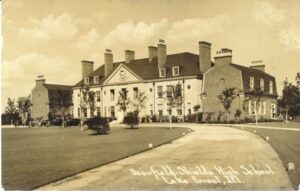
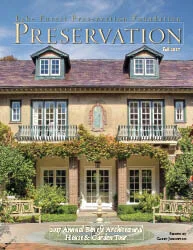
Fall 2017 2017 Annual Benefi t Architectural House & Garden Tour Photo by Cappy Johnston As of mid-October 2017, work is nearing completion on the new restrooms that have been moved into the south wing of the 1900 station, the one-time baggage area, the restrooms will have the same new red clay tiles selected for the waiting room, and new marble baseboards, The tile and baseboard selections are based on a portion of the original floor found under the counter of the 1980’s-barber shop, and will be used throughout the waiting room, ticket area, and entry, This old restroom space will become a passageway into the waiting room after this space is rebuilt, Work on the waiting room is underway, with the recent removal of the 1980’s vertical wainscoting revealing the original 1900 horizontal red-oak plank wainscoting, As exposed now, it is possible to see what replacement and transition material and work is needed; contractors and architects are being consulted about these points, Work will begin on this during the cold-weather months, and the City plans to use the north waiting room, originally the ladies’ waiting room, while the south, or men’s waiting room, is under construction, Since Preservation’s Annual Fund campaign last year, and including Preservation’s match from funds in hand of $25,000, nearly $100,000 has been raised for the work of rehabilitating the waiting room, ticket area, and entry—floor, walls, benches, lighting, and display arrangements, It is too early to tell if this amount will be adequate to meet the costs of the wainscoting restoration work, while specifications still are pending, The guide through all this work is the 2009 Historic Structure Report, funded by Preservation and available on the Foundation’s website, www.lfpf.org, From the President Why Preservation Matters At a recent committee meeting, a Preservation Board Member made the comment “Preservation is an investment in the future,” That caused a brief discussion, but also started me thinking about not only the economic benefits of preservation but of the cultural benefits as well, Numerous studies have shown that among many historic districts across the country, properties within local historic districts appreciate at rates greater than that of the local market overall and faster than similar non-designated neighborhoods, But perhaps a factor more important is the issue of place and memory, We all remember our first date, car, and loved ones, Preservationist Donovan Rypkema says, “The city… tells its own past, transfers its own memory, largely through the fabric of the built environment, Historic buildings are a physical manifestation of memory, and it is memory that makes places significant,” He goes on to say, “We need to use our community, our cultural resources and our memories in such a way that they are available to future generations, Historic preservation is a responsibility of stewardship and not merely a right of ownership,” The stewardship of the structures as well as the meaning and memory of our community is represented in those buildings and homes, To paraphrase writer John Ruskin, we save old buildings because we need to preserve the mark left on our national landscape by the many people who have shaped it, We need our collective memory, Preservation strengthens a partnership that makes for orderly growth and change in our communities: the perpetual partnership among the past, the present and the future, This dynamic partnership encourages each generation to utilize the best of contemporary thought and technology without rejecting the history, culture, traditions and values on which our lives and our futures are built, When it’s allowed to work as it’s supposed to, this partnership shapes the sense of continuity that art historian Sigfried Giedion says is “part of the very backbone of human dignity,” In the long run the educational, cultural, aesthetic, social and historical values of preservation are more important than the economic value, The economic contributions of historic preservation, as summarized in a newsletter by the Advisory Council on Historic Preservation, “need to be among the many factors a community considers when pondering its future, But a community without memory is a meaningless 2 Train Station Interior Rehabilitation: Progress Report On the left, original red clay floor tiles are exposed in a portion of the waiting room, On the right, new matching English red clay tiles are added to the new restroom area, Continued on page 6 The recent removal of non-historic 1980’s paneling in the waiting room area reveal the station’s original horizontal plank wainscoting, still intact underneath, The Preservation Foundation celebrated its annual benefit on the afternoon of September 30, Many thanks to the homeowners featured in this newsletter, Our Generous Sponsors: Forest & Bluff Tour Media Sponsor Craig Bergmann Landscape Design Tour Sponsor Lake Forest Bank & Trust Tour Sponsor Lake Forest Hearing Tour Sponsor April’s Linens Davey Tree DiVinci Painters Fitness Together Forest North Dental Fresh Market Knauz Motors KZF Development – Meadow Ridge Lake Forest Place Mariani Landscape Market House on the Square Melichar Architects Merrill Lynch/Tim Newman Northwest Vascular and Vein Specialists Linda Shields SilverPepper Sunset Foods The UPS Store V.J. Killian Webb Financial Group The Committee, House Chairs, and many Docents Without their support and time, this lovely event would not have been possible, The Uniqueness of the Shaw Tradition 3 Fall Architectural House & Garden Tour As the Year Ends Celebrate Preservation’s Success Keep Success Going with a Gift to Preservation Right from the start, Lake Forest was “a special place,” planned in a beautiful setting of lake, woods, ravines and bluffs, Over time, renowned architects and landscape designers built gracious country residences here for well-known Chicago families, The inspired planning continued with the downtown train station and Market Square, still landmark destinations, Today, the original plan endures, carefully adapted over decades of societal change and development, Our community’s exemplary stewardship vividly demonstrates that “Lake Forest is not just another suburb,” The Preservation Foundation, its members and supporters, work with the community and The City of Lake Forest to preserve and ensure that the architectural and landscape treasures that define our community are preserved so future generations can experience and enjoy them, Your support makes this possible, Many thanks to our supporters and partners who helped achieve this goal this year, • The generous residents, family foundations, local organizations, and DAR members, who helped raise funds for the exterior and interior renovation of the downtown train station, • The twelve property owners honored with preservation awards, who demonstrated outstanding stewardship of buildings, landscapes, and neighborhoods, • The City of Lake Forest, which partnered with us to engage renowned speaker Ed McMahon to speak about the importance of historic preservation and remind us of the value of maintaining a sense of place in our community, • The four homeowners, Ragdale, and over 200 supporters of our House & Garden Tour, who helped broaden awareness of the importance of Howard Van Doren Shaw’s influence in Lake Forest, • The two homeowners who shared their exemplary gardens for wonderful Garden Strolls, Each year we dedicate our Annual Fund to a project that needs special attention and will preserve a landmark for future generations, This year we’re studying two projects, one at a building used by the whole community and the other, an important structure from a landmark estate, We expect to announce our choice early next year, What we do know right now is that neither project can become reality without your help, Please support this year’s Annual Fund with a gift to preservation, Your gift, of any size, will help ensure Lake Forest’s future as “a special place,” Thank you! Jim Opsitnik, President Ingrid Bryzinski, VP. Development Make your secure online donation today on the Annual Fund page of our website: www.lfpf.org or use the envelope included in this issue, LFPF is a 501(c)(3) public foundation, Contributions are tax deductible as defined by law, Partnering with the Community Since 1976 to Educate and Preserve the Unique Historic Visual Character of Lake Forest 4 2017 Annual Benefit Architectural House & Garden Tour Of all the great architects who designed residences in Lake Forest in the Country Place Era (1893-1942), Howard Van Doren Shaw (1869-1926) had the greatest impact, This was directly through his many distinguished houses, and indirectly through the architects he mentored and those they mentored on their staffs, down to recent decades, This year’s Annual House & Garden Tour, held in September, featured a few Shaw homes on North Green Bay Road, plus other homes designed by associates or devotees of Shaw, providing an intimate view into the country house vision of Shaw and his associates, Shaw’s impact on Lake Forest began in 1897-98 with construction of his own multigenerational family summer home, Ragdale, which was featured on the tour, The pre-eminent local architect, Henry Ives Cobb (1859-1931), moved east after selling his Green Bay Road farm and home to the founders of the Onwentsia Club, Shaw–a decade younger–began to fill the local architectural design void left by Cobb, most notably with new country places clustered north along Green Bay Road beyond Westminster on two former family farms, Shaw’s best-known and most significant creation in Lake Forest was not a house, but Market Square built in 1916, However, it was his many local paying country house clients who built his reputation so that he could secure financial backing for Market Square, These backers owned his houses, lived in his Lake Shore Drive apartments, or visited these dwellings as guests, and provided the capital for land acquisition and later to implement the final plans, As early as 1913, Shaw’s highest profile former associate, David Adler (1882-1949), founded a firm with another former associate, Henry Dangler, and began a local country house practice that Adler continued to 1935, Less widely known, though locally much respected, are two later associates of Shaw’s, Stanley D. Anderson and Ralph Milman, They both followed Shaw’s lead in the major style directions of their careers, Adler, though, seemed to steer his own course down wider-ranging stylistic and geographic paths, Adler’s houses nonetheless benefited from Shaw’s successful, practical mastery of the form for modern country places, Anderson, with his own firm (1925-1960), extrapolated from Shaw’s Cotswold cottage style into a more Georgian style by the 1930s, Milman led the Howard Shaw Associates firm from the point of Shaw’s death in 1926 until he formed his own firm a few years later, Both Anderson and Milman designed buildings around Market Square, Milman built the 1930s post office in an Art Deco, French style that he was already employing for his work under Shaw at the Darius Miller house on Green Bay Road, and later at his own 1930 home at 1275 North Green Bay Road, Anderson developed the Deerpath Road retail area from Western to Forest Avenue in the same English Arts and Crafts and classic Georgian-style vocabulary of near-by Market Square, Shaw’s legacy is alive today, as six of the twelve Preservation Awards given by the Lake Forest Preservation Foundation in the spring of this year were for Shaw’s work or work by an associate or associate’s associate, all part of the Shaw professional “architectural family tree,” For example, the house by I. W. Colburn at 339 Foster Place that won a rehabilitation award is the work of a professional descendant of Shaw’s, Colburn first studied at Yale with midcentury modern architect Paul Schweikher and then after World War II, worked for him here in the Chicago area, before setting up his own Lake Forest firm in the early 1950s, Schweikher had worked in David Adler’s office in the early 1930s, Adler, in turn, had worked with Shaw, Schweikher and Colburn, in turn, carried this design legacy over into their own practices, The Uniqueness of the Shaw Tradition in Lake Forest Architecture Ragdale North Green Bay Road Current Owners: The City of Lake Forest and the Ragdale Foundation, long-lease tenant Original Owners: Howard Van Doren Shaw and Frances Wells Shaw, 1898 Original Architect: Howard Van Doren Shaw Renovation Architects: John Lord King 1938-42 ; Walker Johnson, 1990, 2013; David Woodhouse, c. 2006 5 House of the Four Winds West Laurel Avenue Original Owners: Mary Campbell and Hugh Johnston McBirney, 1909 Original Architect: Howard Van Doren Shaw Original Landscape Architect: Rose Standish Nichols Restoration Landscape Architect: Craig Bergmann Shaw has been referred to as an eclectic architect for his unique approach to blending styles, This is one of the best felicitous examples, Here, Arts and Crafts British modern style morphs into Ibero-Moorish seamlessly, The garden blends the forms of the Generalife above the Alhambra in Spain, with the colorful flower gardens of England’s Gertrude Jekyll, The Italian villa was a wildly popular form for American country places of the early 20th century, and Shaw’s closest venture in that direction has charming scale and blends with the French style, The formal courtyard garden Shaw projected in his plan, with a rectangular reflecting pool in the center, draws on the ideas of the English Arts and Crafts garden, in turn descended from continental gardens of Italy and France, By 1912 the Shaw firm was engaged for a second owner who wanted a study added, extending the entry façade north, Adler was given the assignment, we know by his signature Louis XV chimney surround, also at his Poole, Mrs. Morse Ely, and Lasker houses, Applegate North Green Bay Road Original Owners: Ethel Hulburd Johnston and Hugh McBirney Johnston, 1911 Original Architect: William Arthur Warren Renovation Architects: Harrie T. Lindeberg; Anderson & Ticknor Garden Designer: Craig Bergmann This large Queen Anne shingled residence was completed in 1911, As it does all along Green Bay Road, the land slopes off to the west fairly precipitously, to a large lawn, Like the landscape, the house is informal; asymmetrical in appearance and plan, The 1920’s/1930’s wall at the front resembles those built in 1928-29 at Green Bay and Deerpath to the south, and like those establishes a visual and sound boundary from the busy roadway, Anderson built most of the wall begun by architect Harrie T. Lindeberg and added a library wing when winterizing the house for the A. B. Dick, Jrs., in the 1920’s, North Green Bay Road Original Owner: E. Norman Scott, 1910 Original Architect: Howard Van Doren Shaw Renovation Architects: David Adler (Shaw Associate) addition, 1912 Restoration Landscape Designer: Cliff Miller, Mariani Landscape The Brewster’s Covin Tree country place of 1907 had its main house on the far side of the post-glacial kettle pond from these two structures, Today, the house is subdivided off from the pond and the gatehouses, both separate properties, Each now has its own identity, with a new house north of the pond, with its own path around it, The matching pair of story-and-a-half gatehouses are reduced in scale by the hipped roofs punctuated by modest dormers and a horizontal band on the walls below the roof, The south unit has been expanded with additions to the west, Covin Tree Gatehouses North Green Bay Road Original Owners: Walter and Katherine (Landcaster) Brewster Estate, 1907 Original Architect: Howard Van Doren Shaw Renovation Architects: Stanley D Anderson, 1948; Sheldon Hill; Virgil McDowell, 2007; Kevin Panik (garage apt.) 2011 6 lAte suMMer GArden stroll Many thanks to Ann and Cliff Miller for opening their personal garden for the Preservation Foundation’s Late Summer Garden Stroll, Guests enjoyed a wide variety of garden spaces or “rooms” that Cliff created over the last ten years, each focused on a different habitat, On a beautiful evening in late August, more than 150 people strolled through a formal rose garden, ornamental shade area, a woodland habitat and even a rain garden that slows, fi lters and stores storm water, Cliff created this wide variety of natural environments on just under an acre of the former Byron Lafl in Smith estate, which in the 1880s stretched from Lake Michigan to Sheridan Road, Appropriately, the Millers’ home was an estate gardener’s residence, The garden was originally designed by O. C. Simonds and lovingly updated and enhanced by Cliff, currently the Design Director at Mariani Landscape, Simonds was a preeminent “landscape gardener,” as he preferred to be called, in the early 1900s, He was known as a committed defender of the natural American landscape and believed that the best design is inspired by the natural landforms on the site, and then executed using indigenous plants, Following in Simonds’ footsteps, Cliff took a similar approach in his personal garden, In addition, he is also very well known for his design and construction management work on many private and public gardens, including the superlative restoration work at Forest Park, Continued from page 2 From the President – Why Preservation matters place, Historic resources are the physical manifestation of memory, Today the quality of life is essential for a competitive community, The long-term quality and character of a community is directly related to its willingness to identify, protect, and enhance those places that defi ne and differentiate it, Educational, cultural, aesthetic, social and historic values are building blocks of quality life, Historic preservation is not about cities being the museums of yesterday; historic preservation is about using heritage resources to build quality of life for tomorrow,” With gratitude to Lake Forest’s residents, 7 Earlier this year, deterioration in the rotunda of the 1931 classic Lake Forest Library building began to impact the large murals that surround the tall room, These were created in 1932 using fresco techniques for the transitional above-door spaces and, probably tempera paint on canvas for the larger ancient author panels by Nikolai Remisoff, a Russian émigré artist, Remisoff had also done work at Centaurs, the Illinois Road David Adler estate of then Library Board President, Alfred E. Hamill, This deterioration led Library Director, Catherine Lemmers, to consult with many restoration experts, The problems stem from issues with the building’s copper-covered dome, designed by architect Edwin Hill Clark, and now in its ninth decade, At its October 10th regular meeting, the Library Board voted to begin rebuilding work on the dome with a canvas covering that iconic local feature over the coming winter, No steps were taken to address the mural problems at this time, though a range of options were considered, including rolling them up for storage, At the same meeting, the Board voted to begin immediately seeking an architect to address library program issues in the building, Except for replacing the glass-fl oored 1931 stacks behind the main desk with regular fl oors and adding one meeting room on the lower level, no major work on the building has taken place since 1977 when three modernist additions were made at the extremities— east, west, and north, In the last 40 years, libraries have seen the most fundamental change in fi ve hundred years since the invention of printing, While much has been done to repurpose existing space, tight quarters defi ne library programs in this highly educated community, Preservationists should be actively interested in seeing that, in accommodating these important changes, the architectural and artistic signifi cance of the classic building not be compromised, The architectural team charged with developing any plans for this structure should include specialists in both library programming and preservation, The Library remains one of the architecturally-best public buildings on the North Shore and among perhaps 30 or so best in the region for its composition, proportions, scale, and superlative interior detail, Architectural and artistic details throughout the building represent many artists, including Audubon, Kneller, Judson, Langenegger, and Remisoff, Signifi cant community private support will be needed to make all of this possible, See lfpf.org for more about the artistic signifi cance of the Library and about the Library’s role in Chicago cultural history, . . . former Board Member, former Preservation Foundation President and current Preservation “Artist in Residence,” Her roots in preservation are deep and strong, Alice grew up in Lake Forest, graduated from Lake Forest High School and went on to study art at the University of North Carolina and the Art Institute of Chicago, She returned to Lake Forest in 1995 with her husband, Robert Moulton-Ely, and shortly after joined the Preservation Board, following her father, David Moulton, who had served as a Director of the Foundation from 1989 to 1995, Alice is an accomplished artist and has never failed to share her time and talents with the Foundation, For many years, Alice has created the renderings used in the Foundation’s House & Garden Tour booklets, hence, “Artist in Residence,” Familiar to many are her meticulously rendered pen and ink drawings of city buildings and private residences, including City Hall, Market Square, Gorton, the East Train Station, and numerous private residences, All are notable for their exacting attention to detail, capturing each building exactly as it appears in life, Alice tells the story of a commission she had for a pen and ink drawing of a David Adler home in Lake Bluff, One of the fi nials on the rooftop was bent, and she drew it that way, When the fi nished drawing was presented to the client, he asked if she could straighten the fi nial out, That was one thing she couldn’t do—not easy in a pen and ink work and simply not a part of her artistic impulse! Lake Forest Library— Preservation Needs and Library-Program Challenges Meet Alice Moulton-Ely . . . LAKE FOREST PRESERVATION FOUNDATION 2017-2018 BOARD OF DIRECTORS EXECUTIVE COMMITTEE Jim Opsitnik President Peggy Pandaleon VP Communications Ingrid Bryzinski VP Development Tom Gleason Laura Luce VP Programs Arthur Miller Secretary Peter Coutant Treasurer DIRECTORS Susie Athenson Lynn Bertram Maureen Grinnell Sharon A. Harvey Linda Liang Debbie Marcusson David Mattoon William McFadden Roger Mohr Elizabeth Moore Fred Moyer Kurt Pairitz Natalie Reinkemeyer Sara TenBroek Lynn Van Cleave HONORARY DIRECTORS Herbert Geist Gail Hodges Pauline Mohr Shirley Paddock Linda Shields Lorraine Tweed EXECUTIVE DIRECTOR Marcy Kerr NON-PROFIT ORG U.S. POSTAGE PAID PERMIT NO. 184 LAKE FOREST, IL 60045 ECRWSS Residential Customer Lake Forest, IL 60045 Preservation FALL 2017 VOLUME 10, NUMBER 3 ContriBUtors: Gail Hodges, Marcy Kerr, William McFadden, Arthur Miller, Pauline Mohr, Jim Opsitnik, Peggy Pandaleon, Editor: Peter Coutant PhotoGraPhy: Cappy Johnston LaKe Forest Preservation FoUndation 400 East Illinois Road Lake Forest, Illinois 60045 www.lfpf.org Annual Holiday Celebration Join the membership for wine and hors d’oeuvres, Sunday, December 3, 2017 Two O’clock to Four O’clock Advance Reservations Only ~ Please RSVP by November 29, 2017 www.lfpf.org ~ (847) 234-1230 ~ offi [email protected], Lake Forest High School Named to Architectural Digest Most Beautiful List In a September 12, 2017 article in Architectural Digest identifying The Most Beautiful Public High Schools in Every State In America, Lake Forest High School was selected as the most beautiful public high school in the state of Illinois, Designed by Stanley D. Anderson in 1935, the school exemplifi es the architectural excellence that characterizes the city of Lake Forest, while refl ecting the country manor house style of the Lake Forest estates of the time.
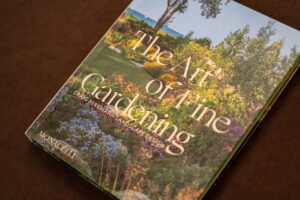
The Art of Fine Gardening: Craig Bergmann Landscape Design
Craig Bergmann and Russell Buvala presented The Art of Fine Gardening, showcasing four decades of landscape design that unites architecture and horticulture. Featuring twenty North Shore gardens—including the historic Gardens at 900—the book blends stunning photography, personal stories, and practical guidance for gardeners and design enthusiasts alike.