PRESERVATION FOUNDATION OFFICERS AND DIRECTORS Office1·s Alice F. Moulton-Ely PRESIDENT Pauline M. Mohr V1cE PRESIDENT, MEMBERSHIP Janet M. Gibson V1cE PRESIDENT, PROGRAMS Carol A. Champ SECRETARY James F. Herber TREASURER Oh-eel.ors Marcia 0. Bennett Edward H. Bennett, Ill Paul T. Bergmann Laureen Grieve Maureen Grinnell Judith A. Harris Michael Hrusovsky Elaine B. Hughes Arthur H. Miller Edward Notz, Jr. Dustin O’Regan Shirley M. Paddock Jane Partridge Patricia C. Riess Linda L. Shields Craig Speed Honorary Directors Herbert Geist Gail T. Hodges Lorraine A. Tweed Henry P. Wheeler Sarah D. Wimmer !’RESIDENTS OF THE !’RESERVATION FOUNDATION Edward H. Bennett, Jr., 1976-1978 Gayle K. Dompke, 1978-1980 GailT.Hodges, 1980-1982 Herbert Geist, 1982-1984 Lorraine A. Tweed, 1984-1986 HenryP. Wheeler,1986-1988 Sarah D. Wimmer,1988-1990,1992-1993 Pauline M. Mohr, 1993-1995, 1997-1999 Richard J. DuBourdieu, 1995-1997 Edward H. Bennett, Ill, 1999-2001 Linda L. Shields, 1990-1992, 2001-2003 Photos: The City of Lake Forest, The Knollwood Club. Contributors: Gail Hodges; Deedee Borland, Marion Cartwright, Stephen Christie, Jan Gibson, Laureen Grieve Ken Leone, Arthur H. Miller, Pauline Mohr, Alice Moulton-Ely. Pre.1·e1Tatio1!1is published by The Lake Forest Foundation for Historic Preservation, Box 813, Lake Forest IL 60045 (847) 234-1230 www.LFPF.org Gail T. Hodges, Editor President’s Message I IIt’s that time of year again for the Foundation’s Annual Historic Preservation Awards, please see this newsletter’s centerpiece for the award nomination form, the four major categories of judging reflect the Secretary of the Interior’s foµr treatment options to consider when working with historic properties, also coming up is our June House Tour which will feature some of the Lasker Estate structures, adaptively reused as private residences, most are from the genius of David Adler and not to be missed, how many of you have driven to the north part of Waukegan Road between Elawa Farm and the Knollwood Club entry, turned onto some of the streets going west, and seen what’s back in there, it’s a part of our town that I didn’t know existed until recently (and I’ve lived here 43 years!), you can also read about it in our article on the Knollwood Area, speaking of things recently discovered, everyone should be aware by now of the magnificent gentleman’s farm buildings that comprise the sixteen-acre Elawa Farm, restoration and rehabilitation work continues as funds become available through the generosity of donors, an update on the project is the focus of another article in this Newsletter, Lake Forest’s Gaslights, the question of their survival continues, in December, the Foundation pledged $15,000 toward their relighting, this amount, combined with the City’s decision not to hire a staff replacement, enabled the City Council to turn the gaslights back on for now, a newly-formed City Ad Hoc Street Lighting Committee is looking into the feasibility of keeping the gaslights lit, as the City readily admits, this topic has received more comment from residents than any other of recent memory, just look at the results of the recent City survey regarding a proposed property transfer tax, one of the questions asked for suggestions for use of the revenue from such a tax, of the 522 surveys that were returned, 83% indicated “no opinion” and the next highest response, 7%, said “gaslights”!, needless to say, please keep following this project, on Sunday, April 24,· the Foundation will hold its Annual Membership Meeting, which will include the election of new Board members and officers, the announcement of our Preservation Award winners, and a reception in a local historic house, please join us, Alice Moulton-Ely Upcoming Programs and Events March-June Open to the Con1munity! Call 847-234-1230 for further information and reservations, Eight Big Ideas from the National Trust for Historic Preservation We welcome Royce Yeater, Midwest Director of the National Trust for Historic Preservation Mr. Yeater will discuss the Trust’s newly adopted five-year strategic plan to become more proactive and effective in its efforts to promote historic preservation strategies as vehicles to stabilize and revitalize communities, State and local partners will be encouraged to follow and reinforce these efforts and Ideas across the country, Members $5; Nonmembers $10 per person, Annual Meeting and Reception Members are invited to attend the Annual Meeting and a reception at a Preservation Award-winning private home, Annual Meeting and Tour for Members only (To join the Preservation Foundation, call 847-234-1230) Garfield Farm: Revisiting the 1840s A slide lecture will be presented by Jerome Johnson, Executive Director of the Garfield Farm Museum, Garfield Farm and Tavern, listed in the National Register of Historic Sites, is a 281-acre 1846 farmstead and former 1840s teamster inn 40 miles west of Chicago and 5 miles west of Geneva, Illinois, the last Garfield family owner, Elva Ruth Garfield, founded the museum in 1977 to teach about America’s prairie farm heritage, come learn how an historic farm property, such as our own Elawa Farm, can become a vital element in a 21st century community, Members, free; Nonmembers, $5, Annual Architectural Walking Tour-Save the Date! View Preservation Programs on LFTV, Channel 19 View Preservation Programs on LFTV, Channel 19 This year’s popular walking tour will feature converted outbuildings from “Mill Road Farm,” the former Albert Lasker estate, once called “America’s Chantilly,” many of these buildings were designed by David Adler, WEDNESDAY MARCH 23 7P.M. Gorton CC, SUNDAY APRIL 24 2P.M. Gorton CC, WEDNESDAY MAY4 7P.M. Gorton CC, SATURDAY JUNE 11 Invitations and announcements to come! 3 National Preservation Month “Restore America: Communities at a Crossroads” Awards that Recognize Stewardship 2005 PRESERVATION NOMINATIONS CALLFOR Awards that Recognize Stewardship 2005 PRESERVATION NOMINATIONS CALLFOR Benefiting the Whole Community Since Preservation Week was created hy the National Trust for Historic Preservation in 1971 to spotlight grassroots preservation efforts around the country, it has grown inro an annual celebration observed by small towns and big cities with events ranging from tours, reenactments and rallies to black-tie balls and state and local competitions, due to its overwhelming popularity, the National Trust has decided to extend Preservation Week into Preservation Month to provide an even larger opportunity to celebrate the diverse and unique heritage of our country’s cities and states, in Lake Forest, May will be proclaimed Preservation Month in honor of our accomplishments in conserving the distinctive character of the community and in recognition of the future diligence required to retain this distinction, as noted by Richard Moe, President of the National Trust: “From coast to coast, preservation has made a difference in the appearance and livability of cities and towns of all sizes, you can see it in historic buildings restored, older neighborhoods made more attractive, Main Streets given new economic vitality, instead of being ignored or smashed �o rubble, historic places are now recognized as valuable, irreplaceable assets that can instill pride in residents, attract tourists and stimulate new investment, but despite the great progress we’ve made and the impressive victories we’ve won, our job is by no means done, older business districts and residential neighborhoods are still marred by disinvestment and deterioration, landmarks of the recent past still don’t receive the attention from preservationists that they deserve, sprawl is still devouring precious open space and destroying the character that makes each community unique, laws that protect historic places are frequently under attack, and many people are still uninvolved, still unconvinced that preservation is relevant to their daily lives…. make Preservation Month 2005 an occasion for celebrating what’s special about the place where you live-and for finding innovative ways to ensure that future generations will be able to celebrate it too.” 4 Richard Moe, President, National Trust, yearly, the Preservation Foundation honors those individuals and organizations whose actions to preserve, protect, and plan for the future of Lake Forest’s heritage demonstrate a commitment to excellence in historic preservation, any interested person, including the owner, a neighbor, a friend, or an admiring passerby may submit an entry, nominations will not be considered without the owner’s consent, approval from the owner will be obtained by the Foundation for those entries submitted by one other than the owner, please Use the Nomination Form at the Center of this booklet to Make a Nomination, award judging incorporates “The Secretary of the Interior’s Standards for Rehabilitation” (see right), there are five categories of awards, Preservation Awards are made to historic structures and landscapes with historic integrity maintained through conservation, maintenance, and repair that preserves original character, Rehabilitation Awards include adaptive re-use and recognize repair, alterations, and additions that make possible continued use of an historic structure while protecting its historical, cultural, and architectural character, Restoration Awards are given to historic structures and landscapes that demonstrate the process of accurately revealing, recovering, representing the state of the historic property as it appeared at a particular time in its history, Reconstruction Awards focus on features and details of� an historic structure or landscape that have been created by means of new construction, New Construction, or Infill, Awards are designated for newly constructed buildings that demonstrate exemplary contextual compatibility with the character of the established neighborhood in which they are built, The Secretary of the Interior’s Standards for Rehabilitation These ten standards should be kept in mind when planning work on an historic property, A property shall be used for its historic purpose or be placed in a new use that requires minimal change to the defining characteristics of the building and its site and environment, The historic character of the property shall be retained and preserved, The removal of historic materials or alteration of features and spaces that characterize a property shall be avoided, Each property shall be recognized as a physical record of its time, place, and use, Changes that create a false sense of historical development, such as adding conjectural features or architectural elements from other buildings, shall not be undertaken, Most properties change over time, Those changes that have acquired historic significance in their own right shall be retained and preserved, Distinctive features, finishes, and construction techniques or examples of craftsmanship that characterize an historic property shall be preserved, Continued on page 6 � The Secretary of the Interior’s Standards for Rehabilitation (continued) 6. Deteriorated historic features shall be repaired rather than replaced, Where the severity of deterioration requires replacement of a distinctive feature, the new feature shall match the old in design, color, texture, and other visual qualities and, where possible, materials, Replacement of missing features shall be substantiated by documentary, physical, or pictorial evidence, � The Secretary of the Interior’s Standards for Rehabilitation (continued) -+– � 6. Deteriorated historic features shall be repaired rather than replaced, Where the severity of deterioration requires replacement of a distinctive feature, the new feature shall match the old in design, color, texture, and other visual qualities and, where possible, materials, Replacement of missing features shall be substantiated by documentary, physical, or pictorial evidence.� � Chemical or physical treatments, such as sandblasting, that cause damage to historic material shall not be used, The surface cleaning of structures, if appropriate, shall be undertaken using the gentlest means possible, Significant archaeological resources affected by a project shall be protected and preserved, If such resources must be disturbed, mitigation measures shall be undertaken, New additions, exterior alterations, or related new construction shall not destroy historic materials that characterize the property, The new work shall be differentiated from the old and shall be compatible with
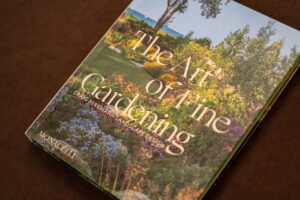
The Art of Fine Gardening: Craig Bergmann Landscape Design
Craig Bergmann and Russell Buvala presented The Art of Fine Gardening, showcasing four decades of landscape design that unites architecture and horticulture. Featuring twenty North Shore gardens—including the historic Gardens at 900—the book blends stunning photography, personal stories, and practical guidance for gardeners and design enthusiasts alike.