PRESERVATION FOUNDATION OFFICERS AND DIRECTORS Officers Alice F. Moulton-Ely PRESIDENT Laureen Grieve Vice PRESIDENT, MEMBERSHIP Janet M. Gibson VICE PRESIDENT, PROGRAMS Paul Bergmann SECRETARY Judith A. Harris TREASURER Directors Marcia C. 0. Bennett Edward H. Bennett, Ill Priscilla A. Billington Susan Dillon Bryant Carol A. Champ Lisa Cregan Susan Halle Elaine B. Hughes Arthur H. Miller, Jr. Pauline M. Mohr Kimberly Nicastro Dustin O’Regan Shirley M. Paddock Frank Ponterio Patricia C. Riess Linda L. Shields Craig Speed Mary Jane Wolter Honorary Directors Herbert Geist Gail T. Hodges Lorraine A. Tweed Henry P. Wheeler Sarah D. Wimmer l’RESIDENTS OFTHE !’RESERVATION FOUNDATION Edward H. Bennett, Jr., 1976-1978 Gayle K. Dompke, 1978-1980 GailT.Hodges, 1980-1982 Herbert Geist, 1982-1984 LorraineA.Tweed, 1984-1986 Henry P.Wheeler, 1986-1988 Sarah D. Wimmer,1988-1990,1992-1993 Pauline M. Mohr, 1993-1995, 1997-1999 Richard J. DuBourdieu, 1995-1997 Edward H. Bennett, 111, 1999-2001 Linda L. Shields, 1990-1992, 2001-2003 Photos: Alice Moulton-Ely, Robert Moulton-Ely, covers, pages 7-9, 11-14; Shirley Paddock, page 10; Jan Gibson, page 14; Lake Forest College Library Special Collections, pp. 4-6. Preservation! is published by The Lake Forest Foundation for Historic Preservation, Box 813, Lake Forest IL 60045 (847)234-1230 www.LFPF.org Gail T. Hodges, Editor APresident’s Message It’s official! After two arduous years of discussions, a revised Building Scale Ordinance and newly introduced Design Guidelines were voted on and passed by our City Council, the effort was spearheaded by the Building Review Board and included input from other City commissions and the community, it was prompted in part by a review of recently approved projects and the not infrequently heard comment of “how’d that happen?” one of the goals is improved architectural design within the boundaries set by the building scale, or “bulk,” calculation, in certain instances, architectural elements on proposed construction were being compressed or overlooked in order to maximize the bulk, for example, roof pitches were being flattened to minimize attic space that counted a certain amount in the calculation, now, attic space will count less, the new “rules” seek to trade bulk for better design-and cut down on that “house too big for its lot” look, it’s a finely crafted document that will help perpetuate the beauty of our community! Gaslight Update an article in our previous newsletter spoke about City budget cuts and the review that was made of the cost to operate and maintain our gas-lit lamp posts, bottom line-gas lights cost the City $234.66 each per year, electric lights run $38.18, there are 438 gas-lit lamp posts scattered throughout the east side and in the historic areas of town, turning off the gas lights would save the taxpayers $75,100 per year, electrifying 75 gas lights on Green Bay Road and turning off the remaining 70 would cost $400,000, and on, these statistics and others, plus the consideration of an “adopt-a-light” program, were discussed again at a recent City Council meeting, as an experiment, the City had turned off select gas lamp posts for a period of time over the summer to see if people noticed, twenty-seven responded with 25 in favor of retaining gas, three offered to help pay for lights near their homes, one person liked the adoption program, another suggested an annual assessment, another that the lights needed to be brighter and one said the cost of gas was too high to justify keeping them, the consensus of the Council at the meeting was that the gas lamp posts add immeasurable charm to our town, since they are included in the next year’s budget, no action was taken nor was expected to have been taken, Mayor Preschlack added that he’d hate to be known as the mayor who turned the lights out in Lake Forest, please consider the gift of preservation this holiday season, by introducing a friend or neighbor to the Preservation Foundation through a gift membership, you support preservation and also broaden support in the community, please see the form on page 15, we thank you, Alice Moulton-Ely Upcoming Programs and Events December-March Open to the Community! Members Holiday Party A Special Event for Members Only this year’s holiday celebration of preservation affords members the opportunity to view a handsome 1932 residence of Art Deco design, look for your invitation in the mail in November, call 847-234-1230 for membership information and reservations (You also may join the Foundation by submitting the form on page 15 with your membership fee), “The Good, the Bad, and the Ugly: The Sequel” Members Free, Nonmembers $10 join panelists Pauline Mohr, Guy Berg, Tom Rajkovich, and David Woodhouse as these preservationists and architects take on round two of what’s good, bad, and ugly, one of last season’s most popular programs, this lively, illustrated discussion will offer new views around town and the North Shore that are certain to sharpen your senses for preservation, call 847-234-1230 for information and reservations, “Keeping Historic Mortar Healthy” Members Free, Nonmembers $1O come hear Mario Machnicki of Marion Restoration, a specialist in historic preservation of masonry, this slide lecture is a must for anyone in the community dealing with repointing issues, Mr. Machnicki’s presentation is a real revelation and extremely helpful, even to preservationists who have been well educated in construction techniques, call 847-234-1230 for information and reservations, “The Homes of Stanley D. Anderson” Members Free, Nonmembers $1O Paul Bergmann, curator of the Stanley D. Anderson Architectural Archives, will discuss the firm’s residential architecture in Lake Forest and surrounding communities from the 1920s to the 1960s, the lecture will be followed by a reception at an Anderson-designed building, Watch LFTV, Channel 19, for programs presented by the Lake Forest Preservation Foundation Watch LFTV, Channel 19, for programs presented by the Lake Forest Preservation Foundation A special “Thank You” to Lake Forest College Special Collections for generously cosponsoring the Foundations October 28 program “David Adler: [he Persistence of Classical Tendencies'” featuring Thomas Beeby architect, to Mr. and Mrs. Miles Marsh for hosting the September 6 tour and book signing for “Classic Country Estates of Lake Forest, “and to Mr. and Mrs. David Linville for hosting “An Ensemble of Old and New” with Thomas Rajkovich architect on July 30, SUNDAY DECEMBER 7 1:30-3:30 P.M. By Reservation for Members Only SUNDAY JANUARY 11 2-4 P.M. Gorton Community Center TUESDAY FEBRUARY 10 7-9 P.M. Gorton Community Center SUNDAY MARCH 21 2-4:30 P.M. Location to be announced, 3 Preserving the Landscape Character of Lake Forest BY ARTHUR H. MILLER, JR. A few years ago, when the new executive director of the Landmarks Preservation Council of Illinois, David Bahlman, moved into Lake Forest from out of state, he stated that he had been struck that only Lake Forest of all the North Shore suburbs retained its iandscape character amongst its residential structures, why was this? Preservation Tools in Place Our Historic Districts have identified and defined these sensitive areas, our City ordinances have been crafted to recognize these areas and to enable Lake Forest to protect landscape character while allowing modest, sensitive new development, beyond our Historic Districts, essentially all of the rest of the community, too, is comprised of designed landscapes which now are historic, if not obliterated by earlier development, lnapropriate Change Is Underway However, incursions in the five years since Bahlman made his assessment threaten the integrity of our local historic districts, these incursions highlight the need for increased vigilance and more diligent review processes, in the late 1990s, this writer led a campaign to save an historic woodland garden at 1050 East Illinois, even so, a post modern house (a modern house plan with historic exterior elements added as an awkward veneer) was permitted to fill that highly significant space, now, after just two years of occupancy by its owner, this house is on the market, similarly, two other notable historic gardens nearby are being essentially obliterated by developers, one is inside Nettie Fowler McCormick’s stunning walled garden and estate, where the Jens Jensen garden plan, clearly visible on aerial photos, will be lost, the other is the Havenwood garden across Ringwood (shown upper left), designed by the Howard Shaw firm and landcape architect Rose Standish Nichols of Boston, here, most of the famous pool was ripped out recently to make room for a new Italian villa, neither of these radical changes were essential for redevelopment and infill development, but neither developer had the vision or wisdom to save these features, Historic Standards in the classic period, architects such as Howard Shaw and David Adler set a high standard for infill development and for redevelopment, they looked at a site creatively, they designed with consideration for the visual environment in which the new buildings would be constructed, just take a look at Shaw’s Market Square and his Finley Barrell place (shown opposite, at 855 East Rosemary Road, which some readers remember as the Shumway place), or David Adler’s Pike place (955 North Lake Road, on the site of an earlir estate by Arthur Heun), and his J.M. Cudahy place (830 North Green Bay Road), perhaps nowhere, though, is Adler’s infill genius more apparent than at the second home he designed for William Clow, Jr. in the late 1920s (on Ridge Lane, at the northeast corner of Green Bay Road and Deerpath), here, there was a noisy grade school on the east, where now there is a City parking lot opposite City Hall, and a challenging, sloping site with only one good side (north), the architectual solution created here by Adler is such a masterfully-designed small estate that nobody even thinks of it today as a stroke of magic (did you realize that the living quarters of this house are at second-floor height behind the wall, with a lawn stretching south at the level of that floor to give the illusion of a first floor?), at the Pike place, Adler seamlessly incorporated Heun’s original garden into his final plan for the new estate, this stunning solution was dubbed by architectural historian Richard Guy Wilson as one of the most significant Italianate landscapes in this country (Thorne, ed. David Adler, Architect… 2002), this plan was executed on a difficult triangular site which, again, Adler causes us to forget, Shaw, for his part, came up with the striking long mall at Market Square (shown at the top of page 6, this design made that development not only the first shopping center for cars, but also the first City Beautiful development to be a commercially-viable success (Richard Longstreth, From City Center to Regional Mall… 1998), as this is written a new, tall, and uncharacteristically modern,_house is going up near the intersection of Green Bay and Illinois-just one block from Adler’s Clow place at Green Bay and Deerpath-and on a previously-vacant parcel of David B. Jones’ 1895 estate, Pembroke Lodge, designed by Henry Ives Cobb, Shirley M. Paddock recently found a suggestion that the landscape architects of the David B. Jones estate were the Olmsted firm, these were the same planners who designed the landscape at the architect Continued on following page Henry Ives Cobb’s own house further south, where today’s Onwentsia Club is located, now this landscape is the site of an out-of-scale, inharmoniously visible new house with a long street presence that can be glimpsed down Illinois Road from Western Avenue, it may be good modern architecture, but unlike the low, International-Style (circa1960) house by architect I.W. Colburn just to the south and also on property subdivided from the Jones estate, it intrudes on both streetscape and landscape, we can and should do better to protect our fragile, and highly significant, historic landscapes, can there be appropriate new development? of course, the 1998 pool house for 930 East Rosemary, designed by Thomas and Kirsten Beeby, is one distinguished example, another is next door on Mayflower Road, to the south, here, also carved out of the original John T. Pirie estate at 930 East Rosemary, an appropriate small estate was designed by Ralph Milman in the 1950s, on a small lakefront parcel at 1411 North Lake is a fine house built by the Kendler firm in the late 1980s, this house is appropriate, but unobtrusive because it can’t be seen from the road, in historically sensitive locations like this one, located just south of Adler’s striking Dutch-style Bentley place (the one with the white fence with black accents) and on the site of the 1892 W. R. Stirling house torn down long ago, new houses should not and need not make a statement, reticence is the key to success in sensitive areas, designs such as those cited illustrate the value of restraint, subtlety, and discipline, just take a look again at the visual quality of Market Square, shown above, as stewards of some of the most significant architecture and residential neighborhoods in the Midwest, Lake Foresters today are charged with preserving a truly remarkable landscape and built heritage for future generations, to be responsible, we need to forego approval of insensitive proposals, these continue to be all too common, even after consideration by the City’s Historic Preservation Commission, unlike most of our North Shore neighbors, Lake Forest is doing an excellent job of controlling teardowns, but that is only half the job to be done, true stewardship demands more: management of infill, new construction, and additions to preserve Lake Forest’s unique landscape character, the construction and nomination committee for the Deerpath Hill Estates project is moving forward on a two-pronged preservation project: gate repair and National Register nomination for the houses and architectural elements of Deerpath Hill Estates, these initiatives are the outgrowth of the Foundation’s 2002 Deerpath Hill Estates house and garden walk, funds raised from the House Walk will be used to underwrite the project, this activity illustrates just one example of how Preservation Foundation fulfills its mission to preserve and enhance the historic visual character of Lake Forest for future generations, the Deepath Hill Estates Entrance Gates most people are familiar with the gates at the south entrance to King Muir Road at Deer Path (shown above right), the committee is studying costs to repair these gates and the other architectural elements of the development, in addition to the gates at King Muir, there are gate posts at Mellody Road and the former Armour Circle (now a cul de sac) entrances to the project from Waukegan Road, Deerpath Hill Estates: Gate Repair and National Register Progress Report BY PAUL BERGMANN Deerpath Hill Estates: Gate Repair and National Register Progress Report BY PAUL BERGMANN The Circle or “Moon Gate” the project also includes an unusual architectural element, a circle gate (now commonly called a “moon gate,’ shown below left) on an abandoned pedestrian right-of-way that connected Verda Lane and Waukegan Road before State Highway 43 became a heavily-traveled thoroughfare, the circle gate needs substantial repair, currently, invasive buckthorn plants of tree size, dense underbrush and fences hide the circle gate from view, the committee is studying the feasibility of moving the gate from its current location to a more prominent location in the project, where it can be enjoyed, by residents and visitors, moving and rebuilding the circle gate may necessitate further fundraising if studies determine that moving the gate is physically feasible, the National Register Nomination the historic area includes King Muir Road, Verda Lane, Mellady Lane, Chiltern Drive, Deerpath Square and Parkmead Lane, within the area, there are fourteen historic houses in additi9n to the gates at King Muir Road and DeE:i°r Path and the “moon gate” (See photos of six of the fourteen on the following pages), the Illinois Historic Preservation Agency, IHPA, has given the committee a preliminary opinion that the original houses in Deerpath Hill Estates would qualify for listing in the Continued on following page National Register of Historic Places, the architectural character and social history of the project are strong enough to qualify these properties for the nation’s highest honor awarded places of distinction, �-� -l. . . /�1 ‘,, ‘ I �. p �-� -l. . . /�1 ‘,, ‘ I �. p !nstead of a district, the IHPA has recommended that the committee focus on creating a Multiple Property Listing, in a Multiple Property Listing, each property is nominated for individual landmark, but all are submitted with one application, this allows the historic houses to be registered, while the noncontributing houses are not affected, each of the fourteen original houses would be reviewed individually for nomination, the houses between them would be considered not historic because of age (less than 50 years old), style, or multiple modifications, the Significant Houses the Deerpath Hill Estates area was developed as a group of “mini estates,” pictured on these pages are six of the fourteen original houses, the subdivision was created in the 1920s by real estate promoter Henry Turnbull, in 1925 Turnbull hired Stanley D. Anderson to design and oversee design of homes in the new development, a contract architect, William I Braun, designed some of the homes, Braun submitted his plans to Anderson for approval before construction Stanley Anderson hired his cousin, civil engineer James Anderson, to design the plat of subdivision, Anderson laid out the streets and the lots in a plan consistent with the landscape of the original plat of Lake Forest, the fourteen houses to be nominated to the National Register were built on roughly one-acre lots before the project went bankrupt in 1931 during the Great Depression, New Views of Places You Already Know BY GAIL HODGES AND SHIRLEY PADDOCK Green Bay Road most local residents drive on some part of Green Bay Road at some time almost every day, it’s a wonderful and unique stretch of state road, within the Lake Forest city limits, Green Bay Road has a consistency of residences in a parklike streetscape, this view is interrupted at only one point by a nonresidential building, the historic Church of St. Mary, how did this come to be? in other communities, Green Bay Road has many commercial areas, and truck traffic is the norm, why not here? this, like many components of local quality of life, came about through the action of concerned volunteers, from the Lake Forester April 26, 1903: Gentlemen: The undersigned being owners of more than two thirds of the property or the land fronting upon the Green Bay Road between points hereafter stated would respectfully petition that Green Bay Road from the intersection with Deerpath Avenue in said City of Lake Forest southerly and easterly to its intersection with the right of way of the Chicago & Northwestern Railway or near Ft. Sheridan Station be designed by ordinance as a public driveway to be used for pleasure driving only in accordance with the provision of an act of the General Assembly of the State of Illinois entitled an act to provide for pleasure driveways in incorporated cities, villages, and towns, approved and in force March 27, 1889, the letter was signed by: W. Vernon Booth, L.F. Swift, Wallace L. De Wolfe, R. Hall McCormick, Mr. William Gannon, Arthur Bissel, Chas. Edward Pope, Richard M. Bissel, Arthur T. Aldis, Alice King Gade, Laurence H. W. Speidel, David B. Jones, Hannah M.Williams, Robert H. Law, Hugh T. Birch, Mary A. Tuttle, Henry W. Price, based on the Illinois statute of 1889, the City designated Green Bay Road a “pleasure driveway” in 1925, this made it illegal to operate “burden-carrying vehicles” on the road and later, in the 1970s, helped prevent the State of Illinois from widening Green Bay Road in Lake Forest to a four-lane highway, Triangle Park, shown above and located just east of Lake Forest Library at the Deer Path intersection, is also on a common route of many residents, the park was landscaped and improved in 1917 by volunteers from the Lake Forest Garden Club, the Club held a design competition, and then obtained permission from the City Council to undertake the work, which the City guaranteed it would maintain in the future, designed to provide pleasing views both to visitors within and to passersby, the park was designed as a “green garden” for cost-effective maintenance and longevity, over 1,000 shrubs were planted, along with wild roses and hawthorne and crabapple trees, unique in the park is a fountain made from a single rock, weighing over four tons and brought to Lake Forest from the Kuppenheimer estate in Winnetka, the fountain, shown below, was erected by Paul Kruger of Winnetka, he built the fountain to contain a bubbling fountain, a separate fountain for birds, and a fount and wallow for dogs, Preserving the Character of Neighborhoods BY GAIL HODGES as one of the oldest planned communities in the United States, Lake Forest has continuously developed with respect for the landscape plan on which it was platted for its creation by Special Charter of the Illinois Legislature in 1861, the character of Lake Forest is defined by more, however, than the outstanding architecture of its estates manor homes, and public buildings, as� whole, Lake Forest is defined by the visual character of its neighborhoods, Lake Forest neighborhoods vary in age and character, but in each, a single building out of context with its environment can have a disruptive impact on the visual character of the whole area, both the streetscape and the surrounding buildings are affected, ultimately, an accumulation of contextually incompatible buildings affects the visual character of the town as a whole, instead of “someplace special;’the image becomes “everywhere else,” the character of a neighborhood is largely determined by the age, architectural style, and materials of its buildings, landscaping also matters, neighborhoods with mature landscaping are more attractive and have a stronger image, West Park the West Park neighborhood, shown in the photos that accompany this article, is one of Lake Forest’s many neighborhoods with its own special character and history, this area was developed just after the turn of the last century, it is surrounded on the west by historic estates, ofi the south and east by in-town residences on small properties, Market Square, and the central business district, and on the north, by mid-and late-20th century homes, laid out by architect Howard Van Doren Shaw the land in the West Park neighborhood wa� originally part of the Atteridge Farm, it was purchased by trustees of the Market Square Association in 1907, the property laid out by Shaw was planned with lots for sale at modest prices and with generous terms, the idea was to encourage members of the Young Men’s Club to have a stake in the community by investing in homes, the lots were Continued on following page architectural and landscape compatibility to Lake Forest’s historic visual character, they also recognize that new construction must be nurtured for the financial well being and healthy development of the community, central to the goals and objectives of the guidelines is the clear purpose to maintain and enhance the attractiveness of our community, its distinctiveness, and its sense of community, residential standards are designed to meet this purpose, while defining a framework within which good design, including contemporary design, can flourish, made available only to members of the Club in an auction held in October 1907, only Club members were allowed to bid, the lots all sold in one night, with the exception of those facing Green Bay Road, which were larger and were reserved at higher prices, the City bought seven acres for $4,000, this land became West Park, improvements, including streets, sidewalks, and elm trees, were put in by the syndicate, a permanent building for the Young Men’s Club was later build as part of the development of Market Square, today, it houses the shops and offices of the building just behind Marshall Field’s, after the Young Men’s Club disbanded, the building housed activities of the Lake Forest Recreation Department until the late 1970s-early 1980s, some homes were built right away in the West Park neighborhood, others developed during the 191Os and 1920s, the overall character of the neighborhood is one of smaller homes on small lots, included among the vernacular architecture of the original homes are several Sears catalog homes, which have developed a following in recent years, overall, there is a consistency of style, materials, scale, and size among the homes in the West Park neighborhood, newer, replacement homes, are for the most part consistent in scale and materials with the older neighboring properties, the neighborhood also is characterized by detached garages located to the rear of the lots and facing on alleys with minimal visibility from the streets, the homes are set back from the street with consistency, and the small front yards are planted attractively, there are many mature trees in the neighborhood, Design Guidelines and a Neighborhood Like West Park in the West Park neighborhood, as in all of Lake Forest’s neighborhoods, regardless of age, the existing buildings, streetscape, open spaces, and other elements create a unique visual environment and quality of life, to recognize and preserve Lake Forest’s existing sense of time and place in its neighborhoods, the City recently has developed design guidelines to support a revised building scale ordinance, these criteria recognize the importance of, the guidelines set standards in well-defined categories, including consideration of: siting, or topography, rhythm, or the open and solid characteristics of the neighborhood, roof shapes, or how well the roof form harmonizes with nearby roofs, scale, the shape and massing of the building, height, conformance to the predominant height of nearby structures, texture and detailing, consideration of materials, ornamentation, style, chimneys, porches, and shutters, openings, or windows, entry ways, garages and garage doors, landscaping, plants, fences, driveways, Membership and Programs Membership Activities the Preservation Foundation presents public programs and special opportunities for members throughout the year, recent activities included: ”An Ensemble of Old and New: Adaptive .Re-use & New Construction,” a well-received program by architect Thomas Norman Rajkovich, featuring the coach house of the Levi Yaggy estate and a new garage/ coach house (shown at right) built by owners Barbara and David Linville, the program included a slide presentation and a garden PRESERVATION MEMBERSHIP AND THE FOUNDATION GUIDEBOOK Perfect Holiday Gifts ! giving a gift membership in the Preservation Foundation is meaningful way to remember family and friends and also support preservation activities in Lake Forest, the Foundation’s Guidebook to National Register Properties, Lake Forest, Illinois, 2d Ed., includes information on the first two Lake Forest Districts elected to the National Register of Historic Places and on five properties listed individually on the National Register, the Guidebook is available in local bookstores and shops, and at the Foundation’s office at Gorton Community Center, 400 East Illinois Road, Lake Forest 60045, for $15, PRESERVATION MEMBERSHIP AND THE FOUNDATION GUIDEBOOK Perfect Holiday Gifts ! giving a gift membership in the Preservation Foundation is meaningful way to remember family and friends and also support preservation activities in Lake Forest, the Foundation’s Guidebook to National Register Properties, Lake Forest, Illinois, 2d Ed., includes information on the first two Lake Forest Districts elected to the National Register of Historic Places and on five properties listed individually on the National Register, the Guidebook is available in local bookstores and shops, and at the Foundation’s office at Gorton Community Center, 400 East Illinois Road, Lake Forest 60045, for $15.’ If you believe in preserving Lake Forest’s character for reception hosted by the Linvilles (shown below with architect Rajkovich), Miles Marsh, the program featured authors Art Miller, Daniel Meyer, and Kim Coventry, and was followed the next day by a joint presentation with the Historical Society, where the authors shared rare, never-before-presented photos were shown to the audience, Rediscovering I.W Colburn: His Art and JOIN Us• future generations, you SHOULD become a member! YOU Can Help Make a Difference expand support the preservation and restoration of your knowledge and appreciation for the special place we call “Lake Forest” and help ies to guide growth, establishment of National Register historic districts, and the dissemination of knowledge of historic sites, member today, or share your enthusiasm structures, and amenities, for preservation by giving a gift membership Lake Forest Day Parade, where the Preservation Foundation won third prize, Architecture, a panel discussion moderated by Franz Schulte and including noted panelists Arthur Miller, Susan Benjamin, and Ray Bayless (Colburn’s partner), David Adler: The Persistence of Classical Tendencies, a lecture by noted architectThomas H. Beeby, Adjunct Professor of Architectural Design at Yale, whose work includes to a friend or neighbor, with your support, outstanding lectures and other programs are offered for members and the general public throughout the year (see schedule on page 3), membership dues also THE LAKE FOREST PRESERVATION FOUNDATION Box 813, Lake Forest, Illinois 60045 Benefits include members-only opportunities to view exceptional historic homes and gardens, to become a member, complete the membership application below or join us at a future program, your interest and your support are welcome and appreciated, Third Annual Concert in the Square, featuring the Navy Band from Great Lakes with iefreshments provided by Lake Forest Bank & Trust (shown above right), Classic Country Estates of Lake Forest, Architecture and Landscape Design: 1856- the Harold Washington Library Center and the Music and Dance Theater Chicago in Chicago’s new Millennium Park, join us for programs this winter, see the listings on page 3, note that some programs are offered exclusively for members of the I/We want to help preserve the historic character of Lake Forest, please enroll me/us in the selected membership category (Contributions are tax deductible, please make checks payable to The Preservation Foundation), Name Street Telephone City _ State Zip � 1940, a private tour and book signing, hosted at Fairlawn, the 1923 estate of Mr. and Mrs. Preservation Foundation, to join the Foundation, please use the form opposite, D $2,500 Life Member (No annual dues.) D $500 Patron D $250 Sustaining D $100 Sponsor $50 Family D $35 Individual ($20 Student) D Please contact me about volunteer opportunities, In Memoriam Thomas E. Eckland 1931-2003 The Lake Forest Preservation Foundation expresses sympathy to his wife Lois and the family of Thomas E. Eckland on his recent passing, Tom was a long-time friend of preservation and served on our Board of Directors from 1993-1995, In Memoriam Thomas E. Eckland 1931-2003 The Lake Forest Preservation Foundation expresses sympathy to his wife Lois and the family of Thomas E. Eckland on his recent passing, Tom was a long-time friend of preservation and served on our Board of Directors from 1993-1995, to pay via Visa or MasterCard, please complete the following: Name on Card _ Expiration Date _ Account Number _ Signature _ The Preservation Foundation, an Illinois 501(c)(3) public foundation, is open to all who share its goal of progress through preservation. 12103
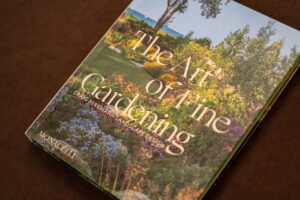
The Art of Fine Gardening: Craig Bergmann Landscape Design
Craig Bergmann and Russell Buvala presented The Art of Fine Gardening, showcasing four decades of landscape design that unites architecture and horticulture. Featuring twenty North Shore gardens—including the historic Gardens at 900—the book blends stunning photography, personal stories, and practical guidance for gardeners and design enthusiasts alike.