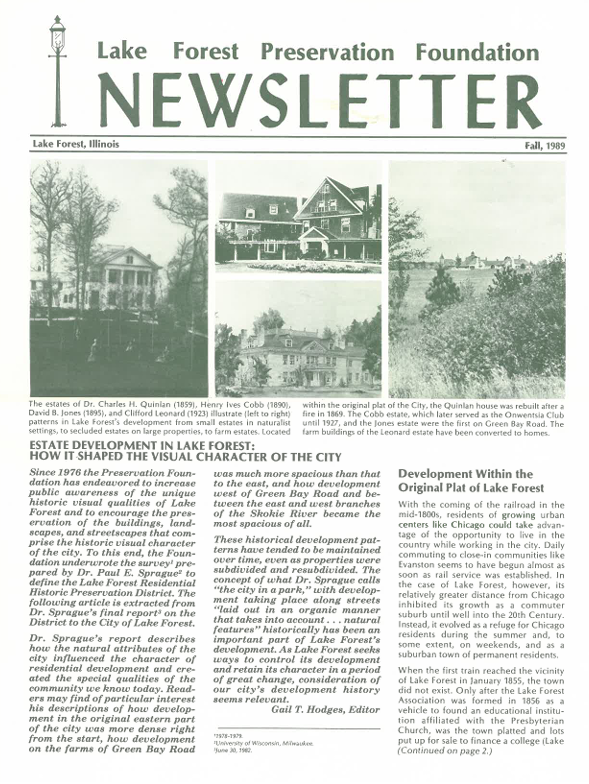
Lake Forest Preservation Foundation NEWSLETTER Lake Forest, Illinois Fall, 1989 The estates of Dr. Charles H. Quinlan (1859), Henry Ives Cobb (1890), David B. Jones (1895), and Clifford Leonard (1923) illustrate (left to right) patterns in Lake Forest’s development from small estates in naturalist settings, to secluded estates on large properties, to farm estates, located within the original plat of the City, the Quinlan house was rebuilt after a fire in 1869, the Cobb estate, which later served as the Onwentsia Club until 1927, and the Jones estate were the first on Green Bay Road, the farm buildings of the Leonard estate have been converted to homes, ESTATE DEVELOPMENT IN LAKE FOREST: HOW IT SHAPED THE VISUAL CHARACTER OF THE CITY Since 1976 the Preservation Foundation has endeavored to increase public awareness of the unique historic visual qualities of Lake Forest and to encourage the preservation of the buildings, landscapes, and streetscapes that comprise the historic visual character of the city, to this end, the Foundation underwrote the survey prepared by Dr. Paul E. Sprague to define the Lake Forest Residential Historic Preservation District, the following article is extracted from Dr. Sprague’s final report to the City of Lake Forest, Dr. Sprague’s report describes how the natural attributes of the city influenced the character of residential development and created the special qualities of the community we know today, of particular interest are his descriptions of how development in the original eastern part of the city was more dense from the start, how development on the farms of Green Bay Road was more spacious, and how development west of Green Bay Road and between the east and west branches of the Skokie River became the most spacious of all, these historical development patterns have tended to be maintained over time, even as properties were subdivided and resubdivided, the concept of “the city in a park,” with development taking place along streets laid out in an organic manner that takes into account natural features, has historically been an important part of Lake Forest’s development, Development Within the Original Plat of Lake Forest With the coming of the railroad in the mid-1800s, residents of growing urban centers like Chicago could live in the country while working in the city, in the case of Lake Forest, its greater distance from Chicago inhibited growth as a commuter suburb until well into the 20th century, instead, it evolved as a refuge for Chicago residents during the summer and as a suburban town of permanent residents, the town was platted in 1856 by the Lake Forest Association to finance Lake Forest College and related academies, early estates were generally two or more acres, set back from the street, with carriage houses and outbuildings, conceived as a picturesque suburban village, the spacious grounds were left open as lawns planted with widely spaced trees and gardens without fences or walls, after the Chicago Fire of 1871, development expanded, including estates overlooking Lake Michigan bluffs, The Early Green Bay Road Estates In 1890 Henry Ives Cobb opened a new area for estate development on Green Bay Road, soon joined by William Henry Smith and David B. Jones, estates on Green Bay Road averaged three times larger than those within the original plat, allowing room for woods, meadows, horses, and livestock in addition to house, gardens, and outbuildings, over time, the open character of early Lake Forest gave way to more enclosed estates with walls, formal gateways, and dense plantings to ensure privacy, The Gentlemen Farmers Around the turn of the century, a new estate type appeared: the gentleman’s farm, Louis F. Swift built such an estate in 1898 on Green Bay Road, farm estates followed between the east and west branches of the Skokie River, including estates of A. B. Dick, Arthur Meeker, Charles Garfield King, and the largest of all, “Mellody Farm,” begun by J. Ogden Armour in 1908, Development in the Post–World War I Period After World War I, new estates were often built on subdivided land from earlier estates or rebuilt after fires, estate development slowed during the 1930s, and after World War II many estates were redeveloped into middle-class subdivisions, The Historical Significance of Lake Forest’s Development Lake Forest is historically significant as a suburban town founded to support a church-related educational institution, it is one of the earliest American suburban communities planned according to picturesque principles, five years after Llewellyn Park, New Jersey (1852), its organic street plan responds to ravines and lake bluffs rather than a grid, by World War I, Lake Forest property owners read like a Who’s Who of Chicago’s most influential families, the concentration of estates designed by prominent architects for wealthy families makes Lake Forest especially significant, architects included Henry Ives Cobb, Charles Sumner Frost, Howard Van Doren Shaw, James Gamble Rogers, Charles A. Platt, Shepley Rutan and Coolidge, Delano and Aldrich, Harrie T. Lindeberg, and Philip Lippincott Goodwin, the result was architecture and craftsmanship of exceptionally high quality, ALTERNATIVES TO SUBDIVISION AND DEMOLITION When land values rise, subdivision and demolition can threaten a community’s character, creative tax-saving alternatives such as conservation and facade easements can preserve open space and historic facades while providing federal income, gift, and estate tax benefits, the value of an easement is determined by a qualified appraiser as the difference between the property’s value before and after restrictions, broader use of easements could help control infill development and preserve community character, PROPERTY TAX ABATEMENT AVAILABLE FOR REHABILITATION State legislation PA-1023 provides an eight-year property tax freeze for single-family, owner-occupied historic homes that are substantially rehabilitated, rehabilitation costs must equal at least 25% of the home’s fair market value, forms are available from the Illinois Historic Preservation Office, PRESIDENT’S MESSAGE Lake Forest’s early beauty—Lake Michigan, ravines, ponds, oak and pine stands—shaped a community of distinctive character, today, with little undeveloped land remaining, change comes through infill, subdivision, and loss of open space and historic streetscape details, residents must consider how these changes will affect Lake Forest’s “special place” and engage in thoughtful discussion about density, preservation, and development as the city moves toward the 21st century, Join the Preservation Foundation and the Historical Society for a walk through Lake Forest history at the Lake Forest Cemetery, Sunday, October 1, meet at the Lake Road Cemetery Gate, 2 p.m., rain or shine, WOULD YOU LIKE TO PARTICIPATE IN FOUNDATION ACTIVITIES? Volunteer opportunities include committee work, research, program planning, hospitality, and newsletter assistance, contact Sarah Wimmer or write to The Preservation Foundation, Box 813, Lake Forest, LAKE FOREST FOUNDATION FOR HISTORIC PRESERVATION Box 813, Lake Forest, Illinois 60045 Membership categories: Member $25, Contributing Member $50, Sponsor $100, Sustaining Member $250, Patron $500, Life Member $1,000 contribution to the Revolving Fund, contributions are tax deductible, The Preservation Foundation Newsletter is published by the Lake Forest Foundation for Historic Preservation and distributed without charge to residents and businesses of Lake Forest.
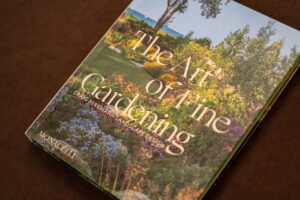
The Art of Fine Gardening: Craig Bergmann Landscape Design
Craig Bergmann and Russell Buvala presented The Art of Fine Gardening, showcasing four decades of landscape design that unites architecture and horticulture. Featuring twenty North Shore gardens—including the historic Gardens at 900—the book blends stunning photography, personal stories, and practical guidance for gardeners and design enthusiasts alike.